
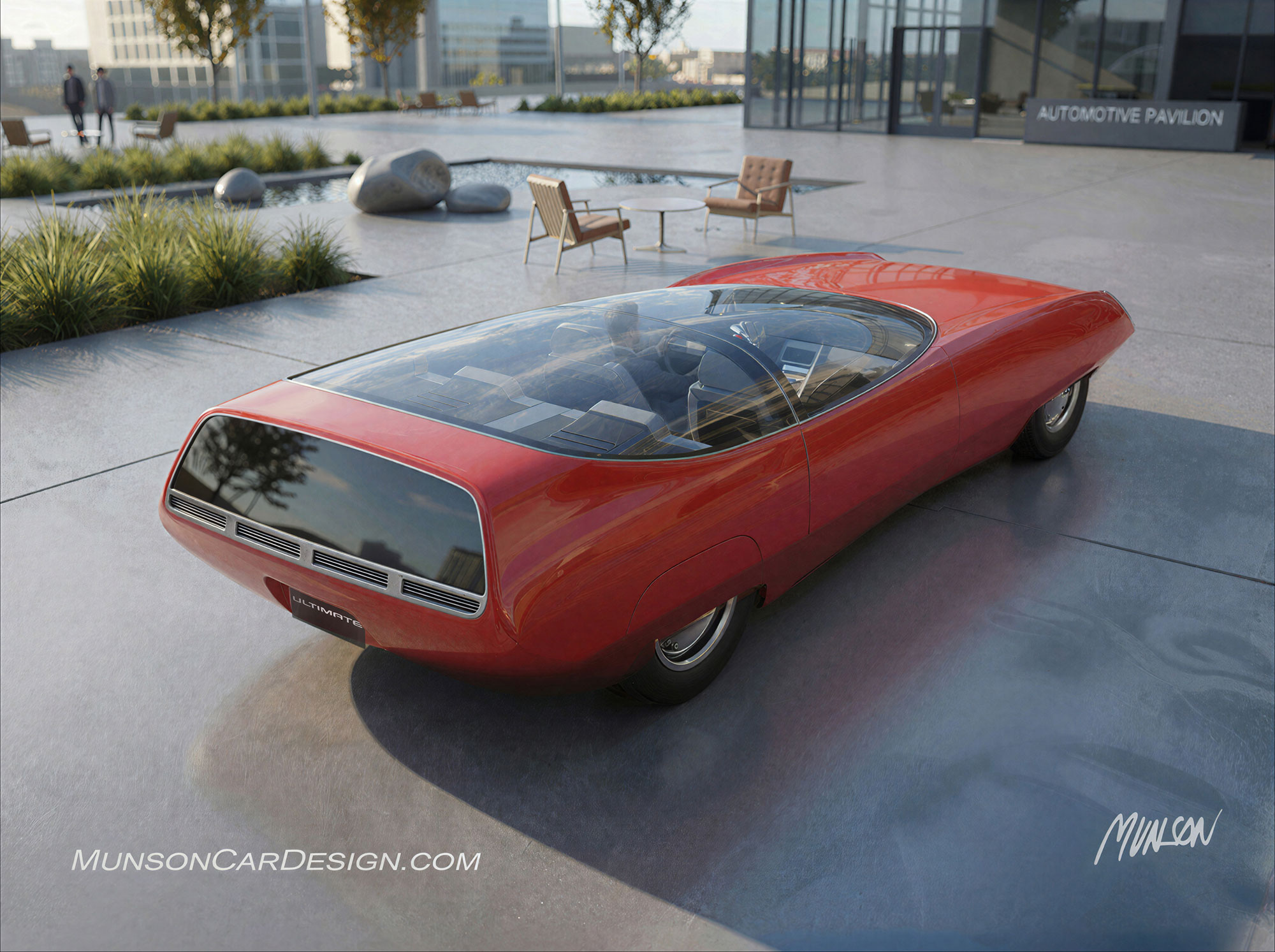
In 1968, when I was 15, I entered my 1/12th-scale model in the Junior Division of the Open Category of the Fisher Body Craftsman’s Guild competition. I chose the Open Category because it had the fewest restrictions. That gave me the freedom to put an extreme rake in the windshield. I was bending the rules even at that age! Of course, the resulting glass distortion would have been a problem in the real world.
My first exposure to the FBCG came in 1965, when my family and I attended the incredible GM exhibit at the New York World’s Fair. I was 12 years old, and seeing those models made a lasting impression on a young car-crazy kid. I already knew I wanted to become a car stylist. After seeing GM’s work at the World’s Fair, I knew GM was where I wanted to be.
I found out everything I could about the FBCG competition and used what I learned to build my first model. I still have the Guild newsletters that illustrated the guidelines, along with photos of past winners and their models.
My first attempt, in 1966, was a three-wheeled design. It taught me an important lesson: how to turn my sketches into a three-dimensional wood model. The design itself was pretty crude, but the process was invaluable.
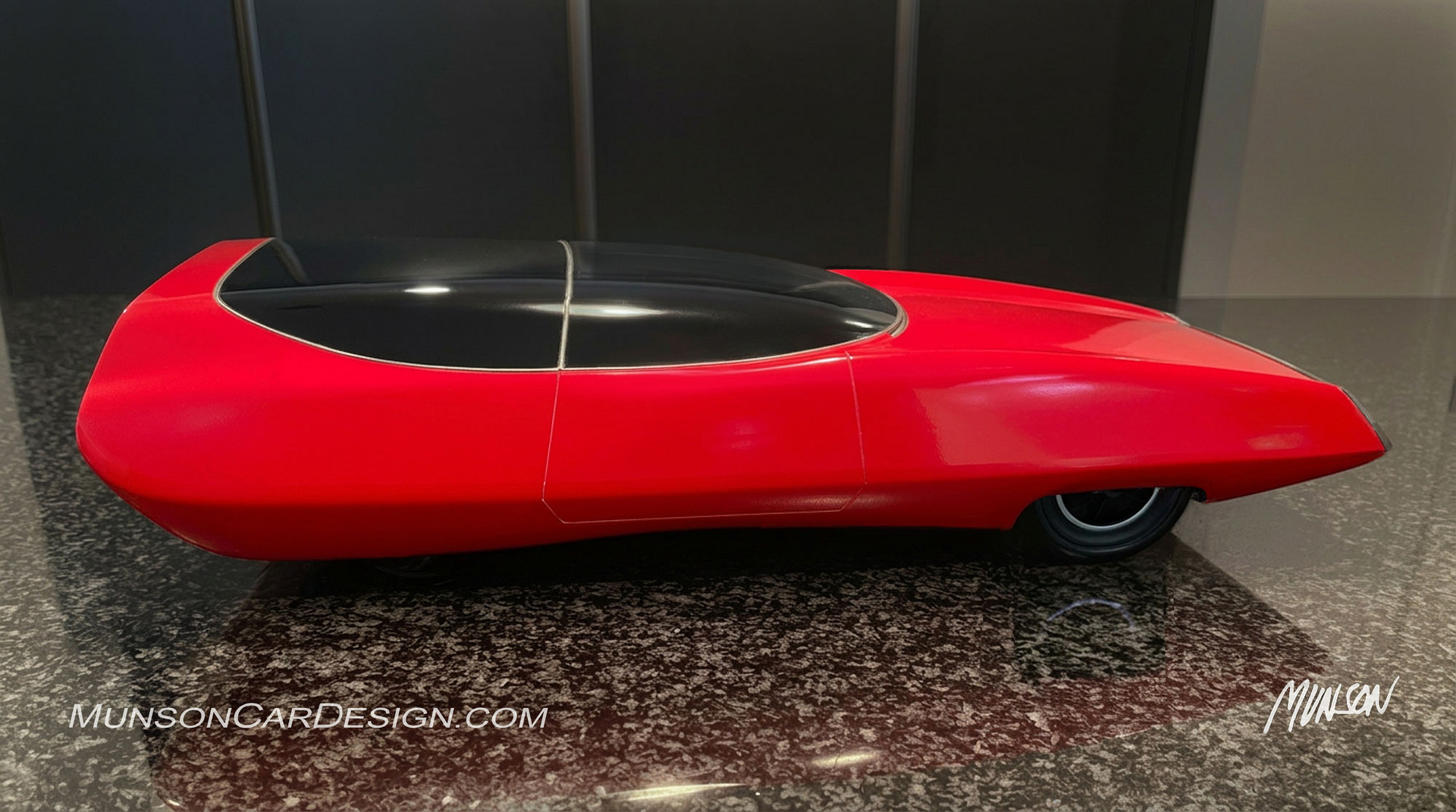
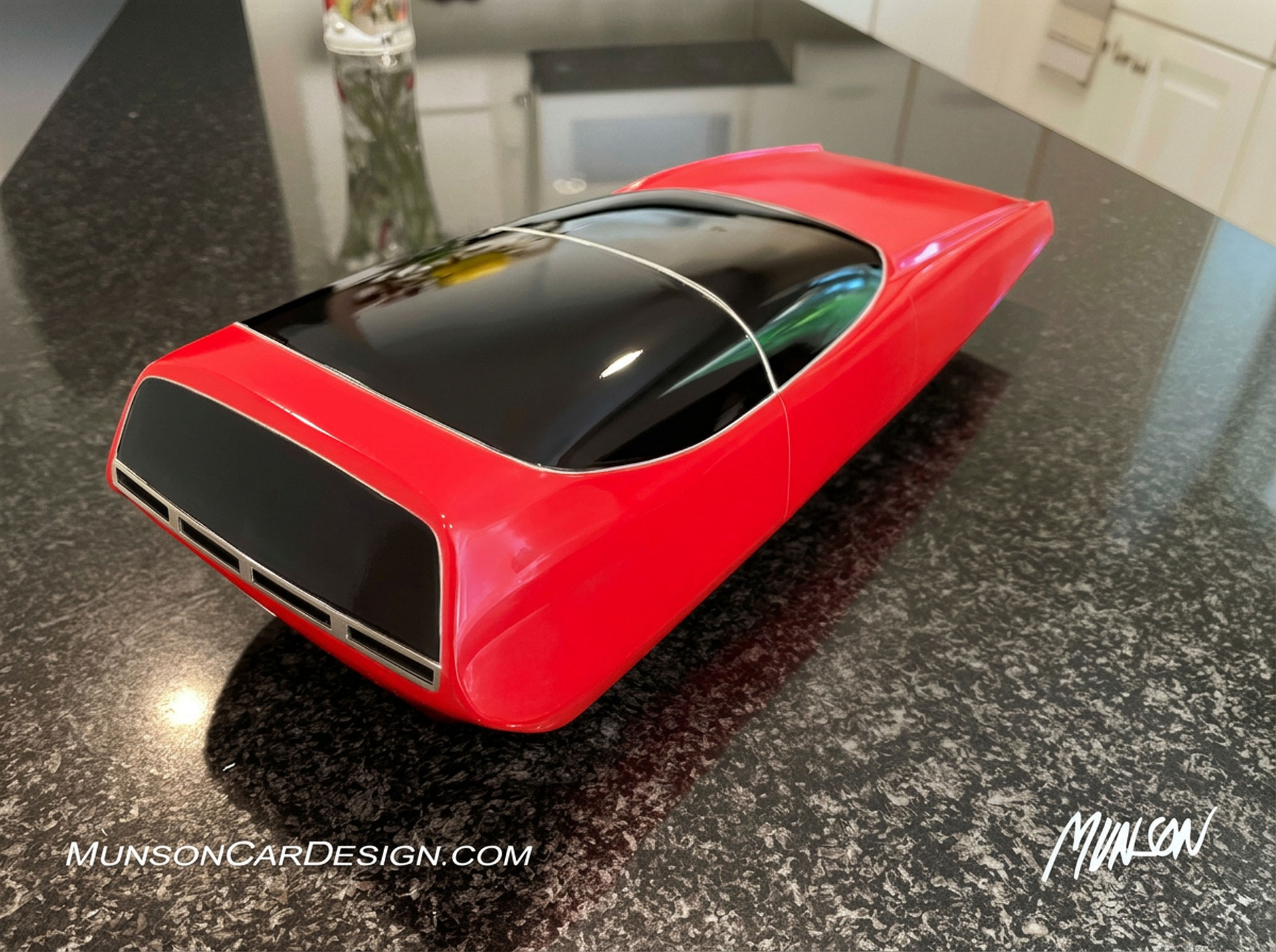
For my next model, I was inspired by the GM-X Stiletto show car from the 1965 New York World’s Fair. What was unique about my design was its Kammback profile. I wasn’t aware of shooting brakes at the time, so I thought I had invented an entirely new category of car!
I initially modeled the design in clay, then used templates to transfer sections from the clay model to the wooden body. The body was constructed from laminated pine. For the taillights, I used the translucent handle of a red toothbrush. The chrome accents were filed from brass and then chrome plated. GM supplied the tires.
My second model won an Honorable Mention in Ohio, along with a $25 award—which was about what it cost me to build the model. I still have the framed Certificate of Design and Craftsmanship from Fisher Body. I also received a Boy Scout merit badge for the achievement.
A few years later, I brought the model with me to my GM Styling interview in 1970 when I applied to the General Motors Institute, now Kettering University. I still give that little model some credit for helping me get hired at GM.
Bringing the Model Back to Life
For this post, I was inspired by Ron Will’s fabulous AI work on Fisher Guild models, featured in the latest DeansGarage.com post. Ron has certainly raised the bar for realistic AI-generated images of these wonderful models.
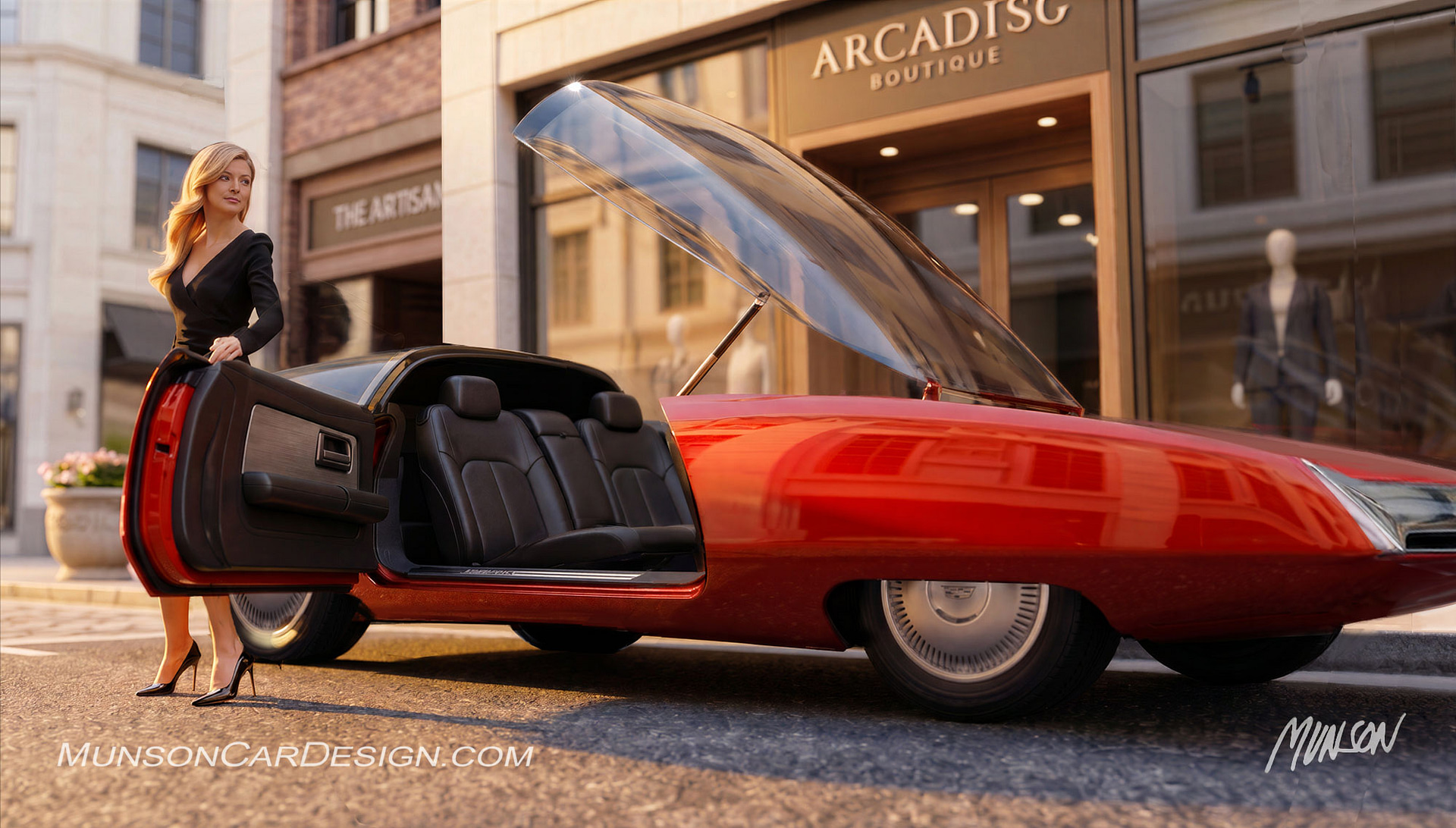
I imported photographs of my model into Vizcom and used it to place the car into various backgrounds. My prompt specifically called for photorealistic images. When I asked Vizcom to swing the glass roof upward and open the doors, it decided to create “suicide” doors and open the glass from the rear. It took several attempts before I got usable results with the glass swinging from the front. Sometimes, you not only have to tell Vizcom what to do—you have to tell it what not to do.
All of the AI images in this post were subsequently reworked in Photoshop Elements. Vizcom did the heavy lifting, but Elements brought everything home.
The video was generated with Vizcom Animation. At first, it kept morphing my model into an entirely different design. I finally had to specifically tell it not to do that!
A Lasting Connection
Over the years, I had the pleasure of working with many designers at GM who had also built Fisher Body Craftsman’s Guild models. Geza Loczi even brought his fabulous first-place model into the Chevrolet studio so I could see it in person.
I’ve included a group photo taken in the mid-1970s at GM Styling. It shows some of the designers, modelers, and engineers who poured their hearts and souls into creating their own personal visions of the car of the future.
Looking back, the Fisher Body Craftsman’s Guild was about much more than building model cars. For many of us, it was an early introduction to design, craftsmanship, competition, and the idea that something we imagined on paper could actually become a three-dimensional object.
For me, it helped set the direction of my life.
And more than 50 years later, it’s still fun to bring that little piece of automotive history back to life.




2 Responses
I recognize most of these guys. Great to remember. Thanks!!
Very interesting.